IP Enforcement Lawyer in Malaysia
We help brand owners, creators and inventors stop counterfeiting and infringement in Malaysia, from cease and desist letters and marketplace takedowns to KPDN complaints, customs notices and High Court action.
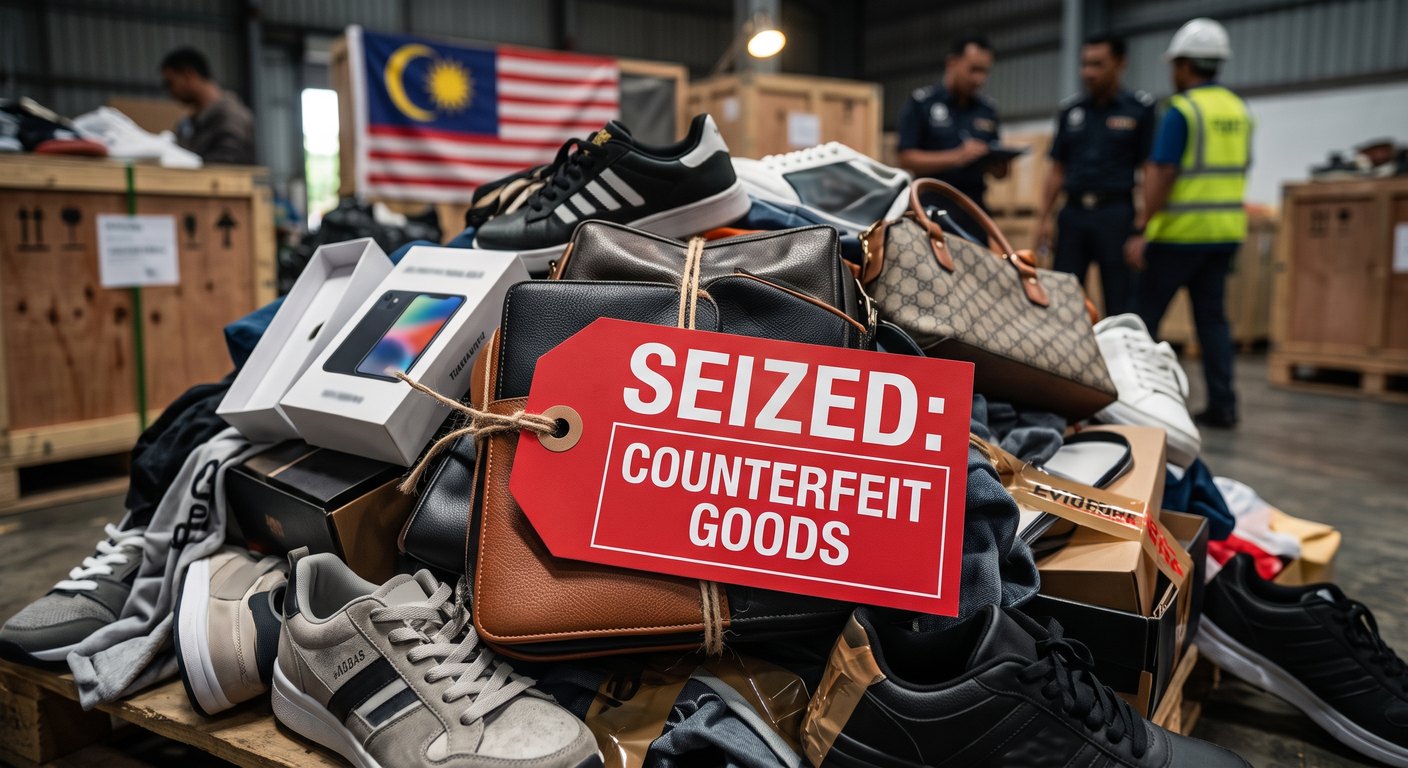
What IP Enforcement Covers
Enforcement is the work of stopping infringement and getting a remedy for it. In Malaysia the right route depends on what is being copied, where and by whom, and often more than one route runs at the same time.
We act for brand owners, creators and inventors against counterfeiters, infringers and cybersquatters, and for businesses that have received an infringement claim. Most matters involve registered trademarks under the Trade Marks Act 2019, but we also enforce copyright under the Copyright Act 1987, patents under the Patents Act 1983 and unregistered rights through passing off.
Our articles explain the main routes in more detail. See counterfeiting and enforcement in Malaysia for raids, border measures and court remedies, and brand protection on e-commerce platforms for takedowns on Shopee, Lazada and TikTok Shop.
Enforcement works best when your rights are registered and documented. If you have not yet registered, start with trademark registration or patent filing, and see how enforcement fits into our wider intellectual property practice.
Enforcement Routes at a Glance
No single route suits every case. We compare the options with you and usually start with the quickest and least costly step that can work.
| Route | Best for | What it can achieve |
|---|---|---|
| Cease and desist letter | A known infringer who may stop when asked | An undertaking to stop and, where agreed, compensation. No court order |
| Marketplace takedown | Infringing listings on Shopee, Lazada, TikTok Shop and similar platforms | Removal of the listing and penalties on the seller. Usually needs a registered mark |
| Complaint to KPDN | Counterfeit goods sold or stored in Malaysia | Enforcement officers can search and seize goods. Prosecution is by the Public Prosecutor |
| Customs border notice | Counterfeits arriving by import | Detention of suspect shipments while the brand owner confirms whether they are fake; goods are released if the owner does not act in time |
| Domain name complaint | Cybersquatting and look-alike domains | Transfer or cancellation through the MYNIC policy for .my names or the UDRP for .com and similar |
| High Court action | Serious or repeated infringement, or where a court order is needed | Injunctions, damages or an account of profits, delivery up and destruction of infringing goods |
Reviewed by Angie Neoh, Managing Partner. Based on the Trade Marks Act 2019 (civil remedies in ss.56 to 60, groundless threats in s.61, border measures in Part XIII and offences in Part XV), the Copyright Act 1987, the Patents Act 1983 and the Trade Descriptions Act 2011. Last updated 3 October 2026. This page is general information, not legal advice.
From First Complaint to Remedy
Our process starts with your rights and your evidence, because the strength of both decides which routes are open.
Review your rights
We confirm what you own: trademark registrations, copyright, patents and any unregistered goodwill. We check the scope of each right against what is being copied, and who owns it.
Gather and preserve evidence
We help you collect authentic samples, test purchases, screenshots and dated records, and where needed arrange investigators. Evidence of a counterfeit rather than a mere similarity is what makes enforcement agencies act.
Choose the route
We recommend one or more of the routes above, weighing speed, cost, deterrence and whether you need compensation or only to stop the sales.
Send the letter or takedown
Many disputes settle after a clear letter or a well supported platform report. We draft with care, because under the Trade Marks Act 2019 a person aggrieved by an unjustified threat can seek a declaration, an injunction or damages.
Criminal complaint or border measure
Where goods are physical, we prepare the complaint to KPDN with the documents it needs, and file a notice with Customs so that imports can be detained. The brand owner is a complainant, not a party, in criminal proceedings.
Court proceedings
Where necessary we bring or defend High Court proceedings, including applications for urgent interim relief. Remedies can include injunctions, damages or an account of profits, and delivery up and destruction.
Settlement and monitoring
Most cases end in an undertaking or settlement. We document it properly and can monitor marketplaces and new filings so that repeat infringement is caught early.
What We Need From You
The more of this you can send with your first email, the faster we can advise.
Bring or send: your registration certificates and application numbers, examples of the genuine product, photos, links or screenshots of the infringing items with dates, any test purchase details and correspondence with the other side. If you have not registered your rights, tell us, because that changes the options.
Your contact partner. Geneive Ngan, Partner, advises on trademarks, patents, copyright and designs, and on licensing and commercialisation. She holds an LLM (Intellectual Property) from Seoul National University. See her profile.
Professional fees depend on the route chosen and how the other side responds. We give you a written estimate before we start, and we do not promise any particular outcome.
IP Enforcement in Malaysia: Common Questions
Straight answers to the questions brand owners ask us most often.
Someone Copying Your Brand?
Speak to our IP team in confidence. We act for Malaysian businesses and for overseas brand owners and their foreign counsel.
Contact Our IP Team →